

The 2027 landline switch-off explained
Every analogue phone line in the UK is being retired by 31 January 2027, and it takes ADSL, alarm lines and lift phones with it. Most exchanges are migrating well before the deadline.
About 78% of UK homes can now get full fibre, and the copper network behind old broadband and landlines is being retired. Here is what is genuinely different, and what is marketing.
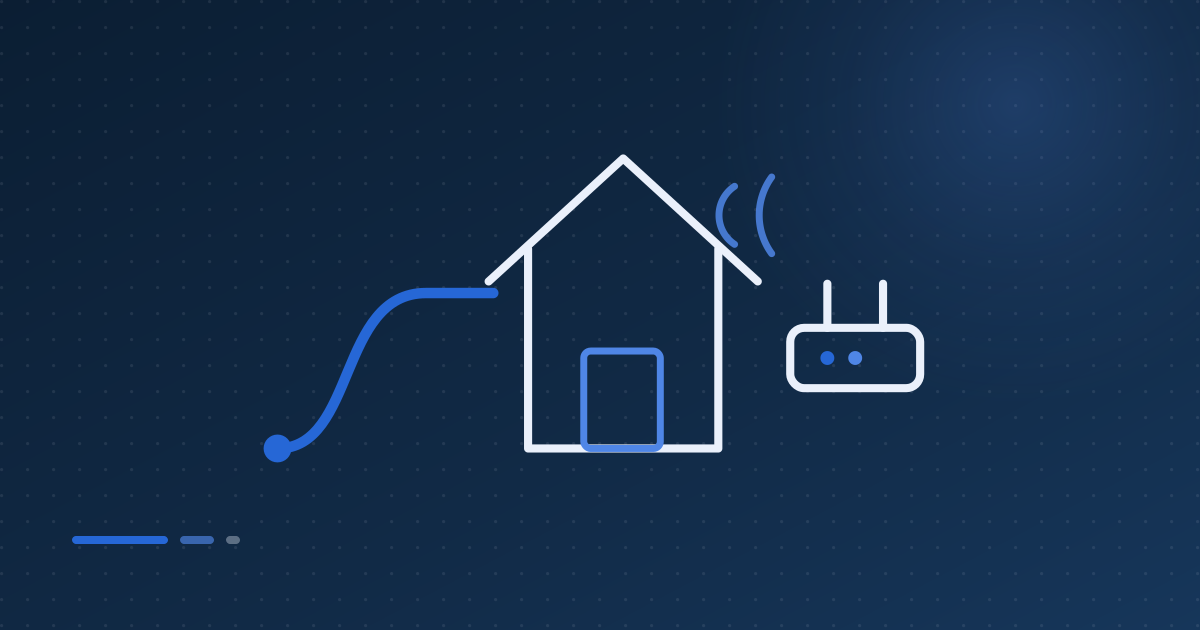
When people say "the fibre upgrade", they are describing four separate migrations happening at once: your landline moving from analogue to digital, your broadband moving from copper to fibre, emergency call resilience moving from the telephone exchange into your house, and the broadband market moving into a new set of Ofcom rules.
They arrive together and get explained as one thing, which is why the letters from providers are so confusing. Around 78% of UK premises can now get full fibre, and the copper network is due to be retired by 31 January 2027.
Old FTTC broadband runs the last stretch to your house over copper, so your speed depends heavily on how far you live from the green cabinet in the street. Two neighbours on identical packages can get very different speeds, and there is nothing either of them can do about it.
Full fibre runs glass all the way to the property. Distance stops mattering. Your speed becomes a function of the package you bought, which is a much more honest relationship than the one copper offered.
The other real gain is upload speed. Copper broadband is wildly lopsided — fast down, slow up. If anyone in the house does video calls, uploads large files, or plays online, upload is often what was actually making things feel bad, and full fibre fixes it far more noticeably than the headline download number suggests.
Your landline becomes digital, which means it plugs into the router rather than the wall socket, and it needs electricity. In a power cut, an old copper phone kept working because the line itself carried power from the exchange. A digital phone does not.
For most households that is an inconvenience. If someone in the house relies on a landline for a personal alarm or a care line, it is not — tell your provider, because they are obliged to offer a solution such as a battery backup unit.
Worth checking too: telecare pendants, monitored alarms and some older medical devices dial out over the phone line. They need testing after the switch, not assuming.
Almost certainly not. The jump that people actually feel is from copper to fibre, not from 500Mb to 1Gb. For a typical household streaming, working from home and gaming, mid-tier full fibre is plenty, and the money is better spent on decent wi-fi inside the house.
That is usually the real bottleneck. A gigabit line into a router hidden in a cupboard behind the telly will still give you a weak signal in the back bedroom. Fixing where the router sits, or adding a mesh point, changes the experience far more than doubling the line speed.
Where the facts in this article came from. If any of it goes out of date, tell us and we will correct it.
Every analogue phone line in the UK is being retired by 31 January 2027, and it takes ADSL, alarm lines and lift phones with it. Most exchanges are migrating well before the deadline.
A few seconds of audio is now enough to clone a voice convincingly. The defence is not clever technology — it is one agreed word and a habit of hanging up.
Copilot+ machines need a 40+ TOPS neural processor, 16GB RAM and 256GB storage. The AI features are real, but the reason to buy one is probably the battery.
Tell us what you are running and we will tell you honestly whether this affects you, what it would cost to put right, and how quickly we can do it. No hard sell.
Open 9am–9pm, 7 days a weekSpeak to a real, local engineer — call us straight away, or leave your number and we'll ring you back.