
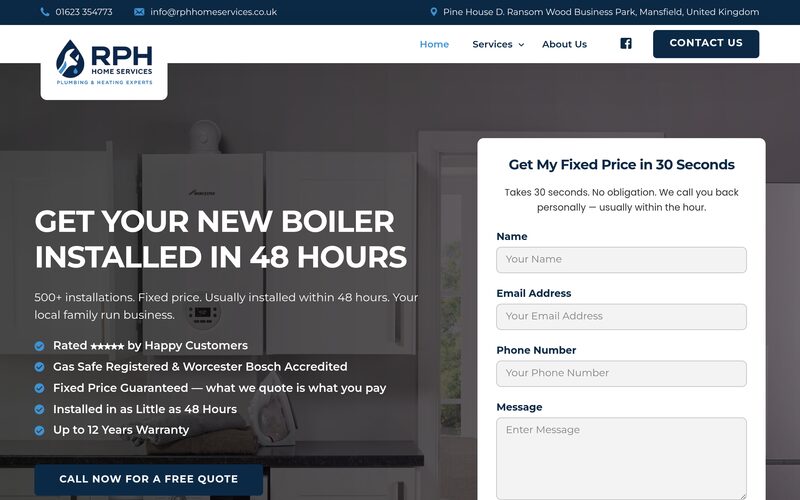
Plumbing and heating
RPH Home Services
Enquiries arriving in three places, and a booking system that consolidates them into one diary.
Website and booking system
Read it
A trades platform where the problem was never the spreadsheets. It was that the same information lived in all five.
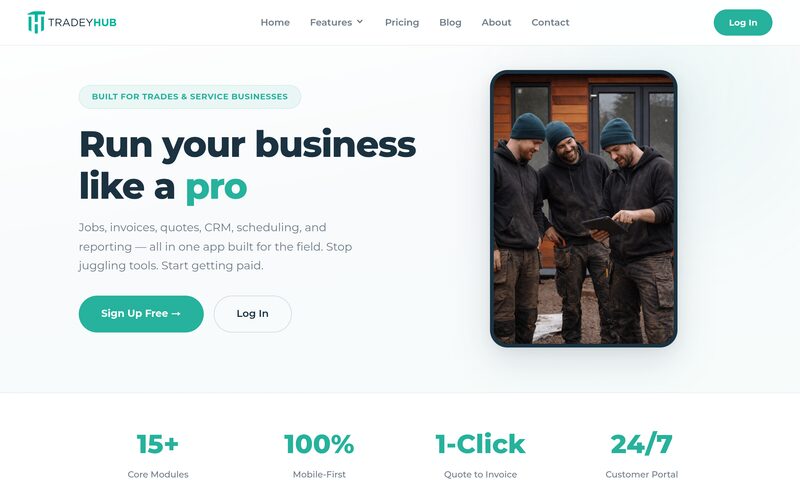
TradeyHub came to us with the problem almost every growing trades operation reaches. The business ran, and ran well, on a set of spreadsheets that had each been created to solve a specific problem at a specific moment. Customers in one. Jobs in another. Quotes in a third. Scheduling in a fourth. Something approximating a set of accounts in a fifth.
None of them was badly built. The problem was that the same customer existed in all five, in five slightly different forms, and every change had to be made in each one — or, more realistically, in the two or three somebody remembered.
We mapped the work before writing anything, which is how every build starts here. Following one job from enquiry to payment showed where the duplication actually was, and it was not where anyone expected: the expensive re-entry was not the customer record, it was the job detail being retyped into a quote and then again into an invoice.
That produced a written plan ranking each piece of duplication by what it was costing per year, and a fixed quote. Two items on that list came back marked as not worth building, which is normal, and is the part that makes the rest of the document trustworthy.
A single platform holding customers, jobs, quotes and scheduling, with one record per customer and one record per job. A quote becomes an invoice without anything being retyped. Job history attaches to the customer rather than living in a separate sheet.
It was delivered in stages, with the quote-to-invoice link first because it carried the largest measurable saving and the lowest risk. That meant part of the system was in daily use while the rest was still being built, rather than everything arriving at once at the end.
The platform is live, and we continue to host, support and extend it. That continuity is the point: the people who built it are the people who run it, so a change request goes to somebody who already understands why a decision was made in the first place.
Each one has a page of its own, covering what's included, what it costs and how we work.
Enquiries arriving in three places, and a booking system that consolidates them into one diary.
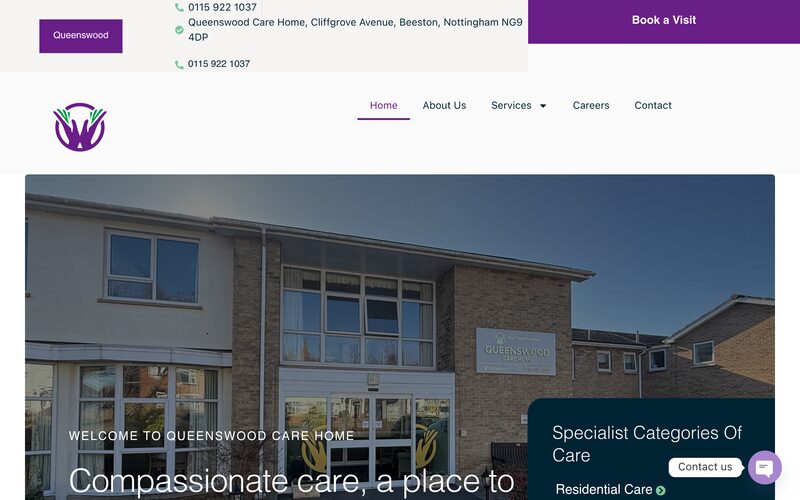
A care home website designed for the person researching at eleven at night, not for the brochure.
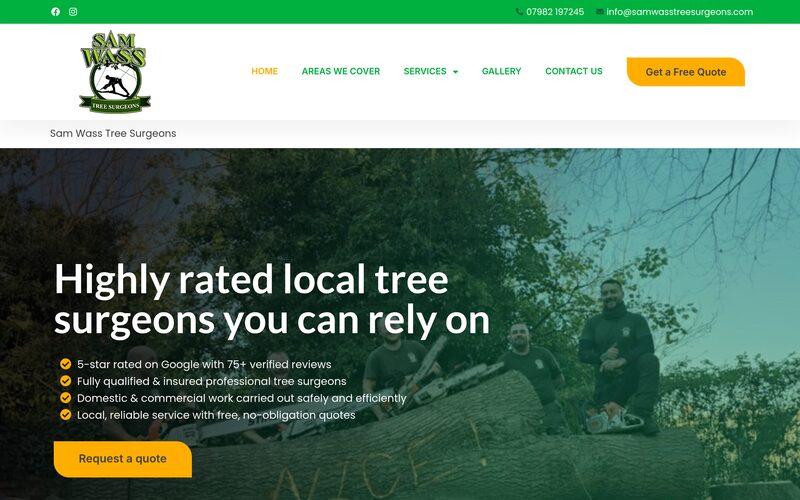
A service business that works across a spread of towns, and a site built for how customers actually search.
Tell us what's going on and we'll tell you straight whether we can help, what it would cost, and how quickly we can start. No hard sell.
Open 9am–9pm, 7 days a weekSpeak to a real, local engineer — call us straight away, or leave your number and we'll ring you back.